Minimalist Travel Packing Planner for Light, Calm Trips
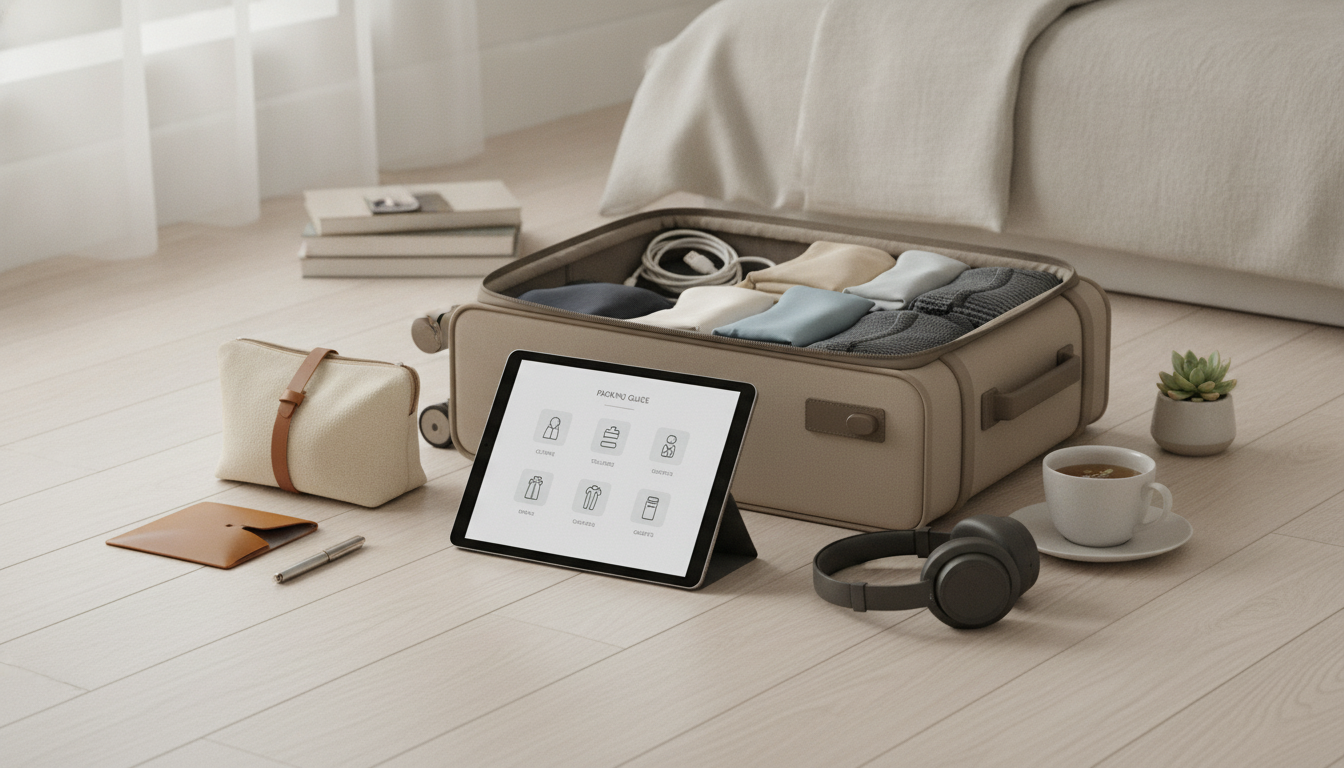
Minimalist Travel Packing Planner: A Digital Guide for Light, Smart, Stress-Free Trips
Packing light gets easier when decisions are made before the suitcase opens. A minimalist approach reduces last-minute shopping, overpacking, and the “did I forget something?” spiral—while keeping outfits functional across multiple days. This digital packing planner is built to streamline choices, organize essentials, and help trips feel calmer from the first checklist to the final zip.
Why minimalist packing works when trips feel chaotic
Travel gets messy when every small choice turns into a debate: Which shoes? How many tops? What if the weather changes? Minimalist packing works because it reduces both the physical load and the mental load.
- Fewer items means fewer decisions: less time spent sorting, matching, and repacking.
- A smaller kit stays under control: easier to carry, easier to keep tidy, and faster at security or hotel check-in.
- Repeatable outfits beat “just in case” extras: planning around multi-use items lowers the urge to bring backups for everything.
- A consistent system speeds up future trips: reuse the same framework and just adjust for destination details.
What’s inside the Minimalist Travel Packing Planner (digital)
A digital planner is most helpful when it’s structured enough to prevent clutter, but flexible enough to fit different trip types. The goal is to plan once, then pack quickly—without rethinking the basics each time.
- Structured packing categories that cover essentials without inviting clutter.
- Space to map outfits and anchor pieces so everything works together.
- Trip-ready checklists that can be reused for weekend getaways, work travel, and longer vacations.
- Digital format for quick edits—duplicate a copy per trip, then refine as routines improve.
- Designed to reduce stress by shifting packing from a rush task to a short planning session.
If you want a ready-to-use template, start with the Minimalist Travel Packing Planner | Digital Packing Guide for Light, Smart & Stress-Free Trips and duplicate it for each destination.
The 15-minute packing workflow (planner-first method)
This approach keeps packing practical: decide the plan, build a capsule, then fill in essentials. When the planner leads, the suitcase follows.
- Set trip parameters: destination, weather range, activities, laundry access, and baggage limits.
- Choose a simple color palette: add 1–2 “hero” outfits (the ones you know look great), then build around them.
- Pick multi-use layers: a light jacket, a mid-layer, and one versatile shoe option (when possible).
- Complete toiletries and tech last: use the checklist to avoid duplicates and overpacking (and to stay within the TSA 3-1-1 liquids rule).
- Run a final “swap test”: if an item only works with one outfit, replace it with something more flexible.
For electronics and power banks, it helps to follow airline guidance on lithium batteries, including carry-on best practices: International Air Transport Association (IATA) — Battery Guidance for Travelers.
Capsule packing examples (so the suitcase stays light)
Capsule packing isn’t restrictive—it’s intentional. These examples keep outfits repeatable without feeling repetitive.
- Weekend city break: 2 bottoms, 3 tops, 1 layer, 1 dressier option, 2 shoes (or 1 if walking-focused).
- Work trip: 1 blazer/cardigan, 2 bottoms, 4 tops, 1 comfortable shoe + 1 meeting-appropriate shoe, wrinkle-release spray instead of a steamer.
- Beach + town: 2 swimsuits, 1 cover-up, 2 casual outfits, 1 evening outfit, sandals + walking shoes, minimal accessories.
- Cold-weather: prioritize layers (base + mid + shell) and rewearable outerwear; reduce bulky extras.
Pack light without forgetting essentials
Minimalist packing only works when the essentials are non-negotiable. The easiest way to stay light and prepared is to separate “must-have” from “nice-to-have,” then stick to the list.
Quick checklist: minimalist essentials by category
| Category | Must-pack essentials | Optional (only if needed) |
|---|---|---|
| Documents & money | ID/passport, cards, some cash, reservations | Copies stored separately, travel wallet |
| Health | Prescription meds, basic pain relief, small bandages | Motion sickness meds, blister care |
| Clothing | Mix-and-match capsule, layers for weather swings | Extra shoes, multiple jackets |
| Toiletries | Basics within liquid rules, toothbrush, deodorant | Full-size products, backups |
| Tech | Phone, charger, power bank (if needed) | Laptop/tablet, extra cables |
| Comfort | Reusable bottle, compact tote | Neck pillow, bulky blanket |
Common overpacking traps (and simple fixes)
Make the system reusable for every trip
Helpful digital add-ons for calmer travel days
- Minimalist Travel Packing Planner | Digital Packing Guide for Light, Smart & Stress-Free Trips — a reusable, edit-friendly packing system you can duplicate for each trip.
- Must-Know Pet First-Aid Cheat Sheet | Emergency Printable Guide for Pet Owners | Vet Tips — useful if travel includes pets, road trips, or outdoor time.
- Positive Parenting Tips Guide | Gentle Parenting eBook | Empathic Communication | Digital Download for Moms & Dads — helpful for family trips where routines change and patience gets tested.
FAQ
How do digital packing planners work for repeat trips?
Duplicate the template for each trip, then update the weather, activities, and baggage limits. Over time, your master list gets leaner as you remove items that repeatedly go unused.
How can packing stay minimalist for a longer trip?
Build a capsule wardrobe with layers, plan to do laundry once, and avoid duplicates in toiletries and tech. For 7–10 days, a tight mix-and-match set (2–3 bottoms, 5–7 tops, 1–2 layers, 1–2 shoes) usually covers most itineraries.
What’s the best way to avoid forgetting important items?
Keep a short “non-negotiables” checklist (ID/passport, payment, meds, keys, chargers) and check it twice: the night before and the morning of departure. Use the planner as your single list so last-minute add-ons don’t create omissions.












Leave a comment